(27-9-2026, Paris)
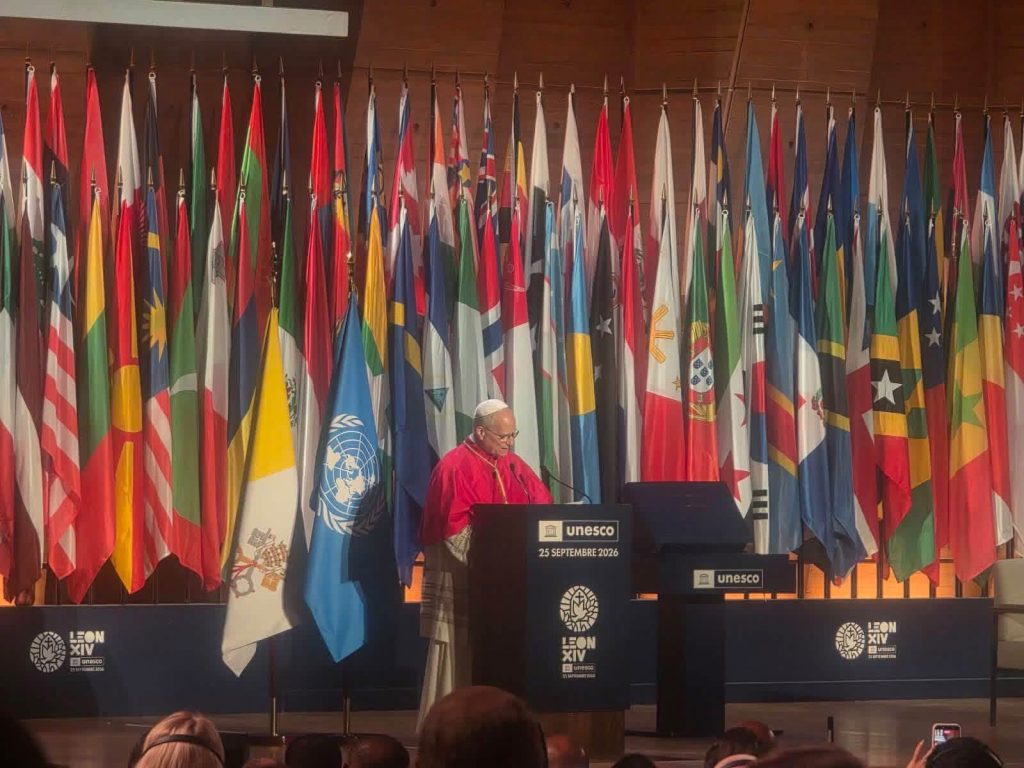
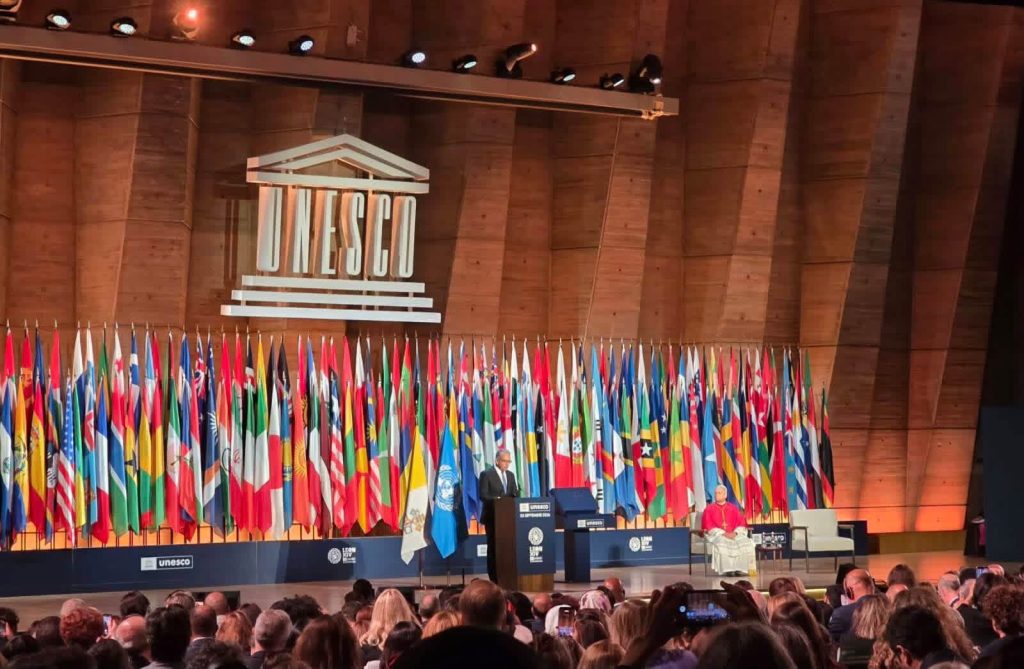
During the visit of His Holiness Pope Leo XIV to the Headquarters of the United Nations Educational, Scientific and Cultural Organization (UNESCO) as part of his official visit to France, a Special Event with UNESCO Member States was held at UNESCO Headquarters on 25 September 2026. H.E. U Kyaw Nyun Oo, Chargé d’Affaires/Ambassador of the Embassy of the Republic of the Union of Myanmar in Paris, participated in the event together with Permanent Delegates/Ambassadors accredited to UNESCO and diplomats, representatives of international organizations, academic communities and civil society organizations.
In his address at the Special Event, His Holiness Pope Leo XIV emphasized that education, science, culture, communication and information are powerful foundations for protecting and promoting human dignity and peace. He underscored the importance of ensuring that the rapid development of Artificial Intelligence (AI) and other technologies is guided by responsibility and used for the benefit of humanity, without undermining human autonomy, dignity and rights. He also highlighted the vital role of education in fostering young people’s capacity for critical thinking, appreciation of truth, and respect and understanding of diversity. Furthermore, he stressed that peace cannot be built through treaties alone, but requires the building of trust and a culture of peace among peoples through education, culture, dialogue, mutual understanding and respect. Following the event, His Holiness toured UNESCO Headquarters, where Dr. Khaled El-Enany, Director-General of UNESCO, presented him with a commemorative book containing messages of peace from UNESCO Member States as a special gift.
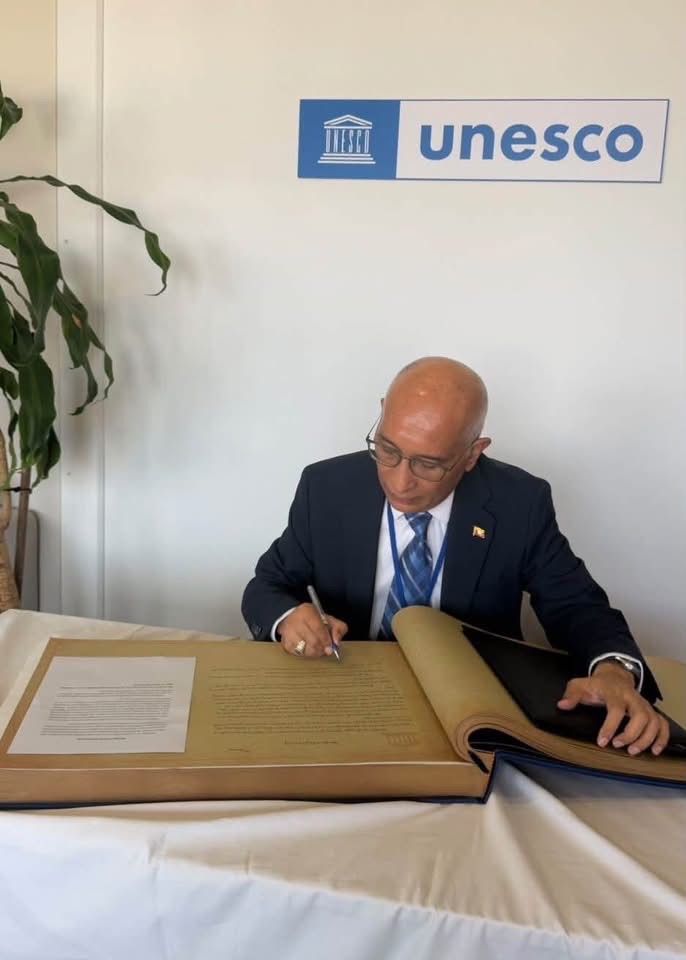
In the commemorative book, the Embassy of Myanmar contributed a message of peace on behalf of Myanmar, emphasizing that valuing diversity through mutual understanding and respect is essential for peace and peaceful coexistence. The message highlighted that education, culture, communication and information serve as bridges that foster understanding, trust and cooperation among peoples and nations, while the participation of young people is essential to nurturing a sustainable Culture of Peace. It further underscored that differences can best be addressed through dialogue, mutual respect and constructive cooperation, which are fundamental to building peace. The message concluded with the aspiration that peace be a journey that we walk together, a responsibility that we share together, and a lasting legacy that we hand down to future generations.